The first State of Tokenomics survey (Release Candidate 1.0, September 23, 2026) examines AI economics across cost, usage and value, much as the State of FinOps survey has tracked FinOps since 2021.
Companies are spending more on AI, but many still cannot show what the business receives in return. The Tokenomics Foundation's survey points to a gap: organizations can see some of their AI costs, while proving business value remains difficult.
Who took the survey
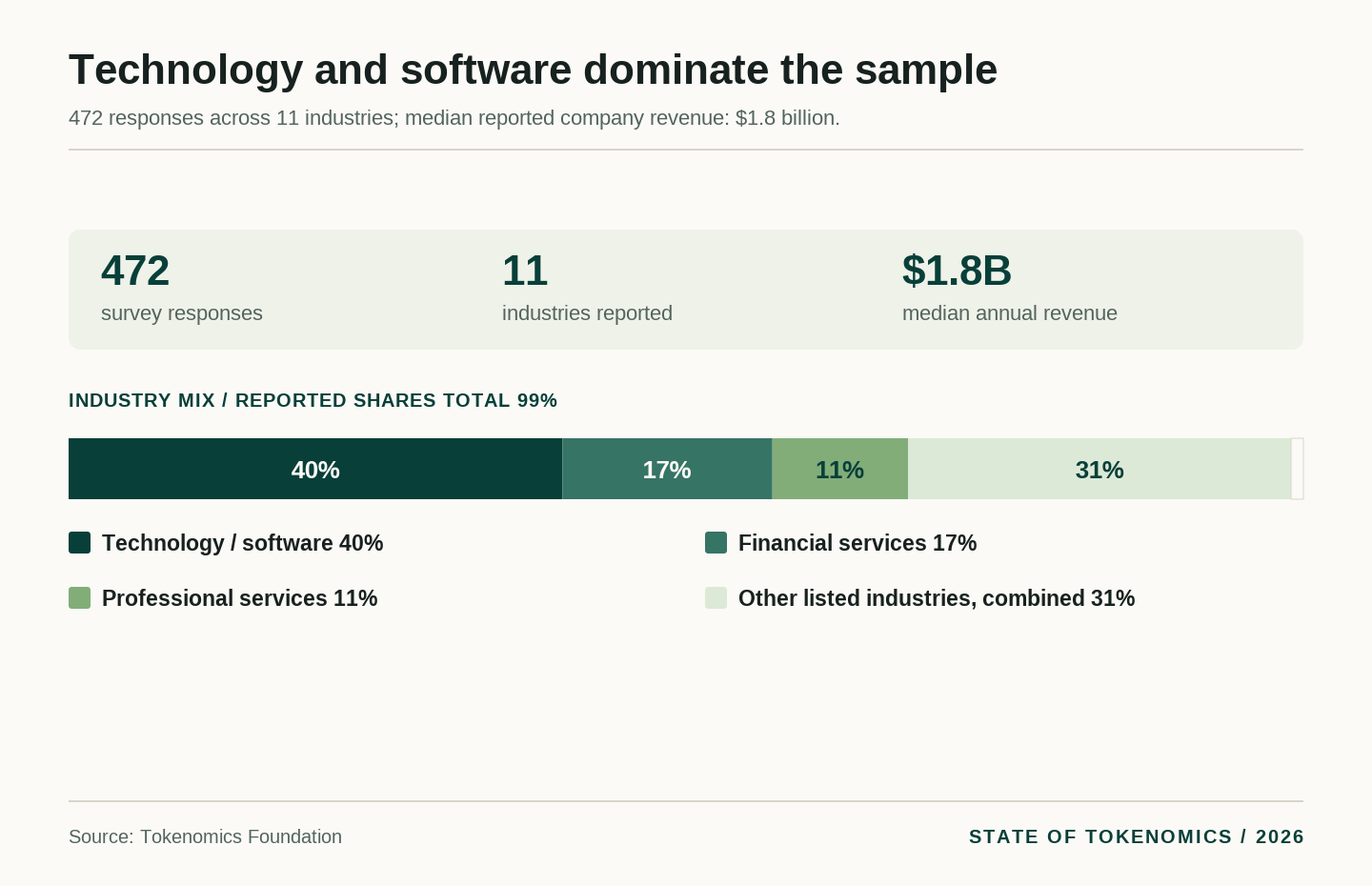
The report includes 472 responses across 11 industries. Technology and software accounted for 40% of respondents, financial services for 17%, and professional services for 11%. The median reported company revenue was $1.8 billion.
The report says participating companies represent about $4.6 trillion in revenue. However, the industry-level revenue figures published alongside the survey add to more than that total. Readers should therefore treat the overall revenue figure as an approximate market-scale indicator rather than a precisely reconciled total.
A more mixed model strategy
Ninety-six percent of respondents reported using a model provider such as OpenAI, Anthropic, Google Gemini, Moonshot AI or DeepSeek.
The survey also suggests a shift toward open-weight models. Fifty-one percent rated their current frontier-model use between 8 and 10; 24% expect to rate it in that range in 12 months. This points to a more mixed model strategy rather than the disappearance of frontier models.
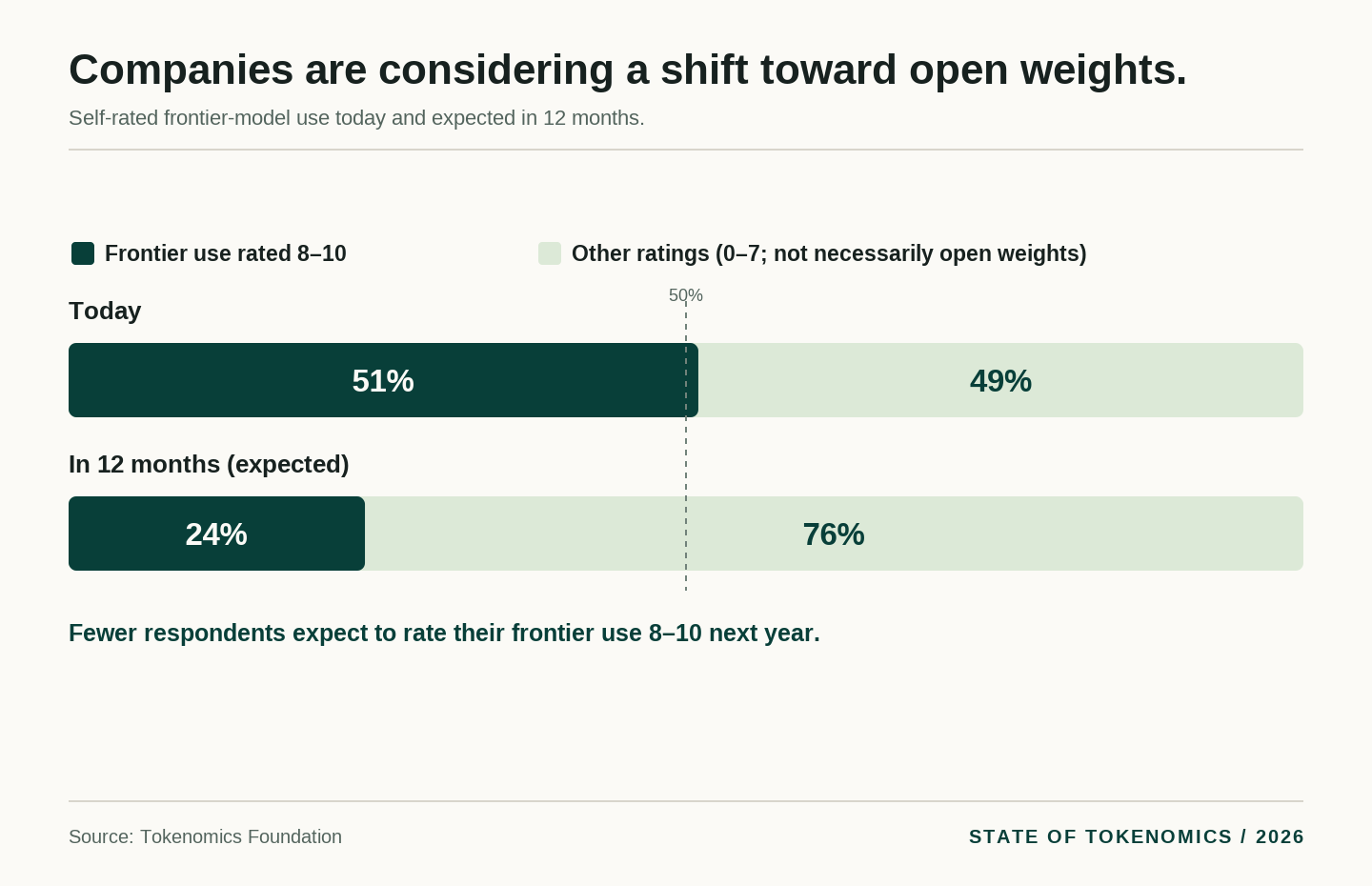
These are expectations, not observed changes. Companies may choose different models based on control, deployment needs, performance and cost.
Seeing spending is not the same as proving value
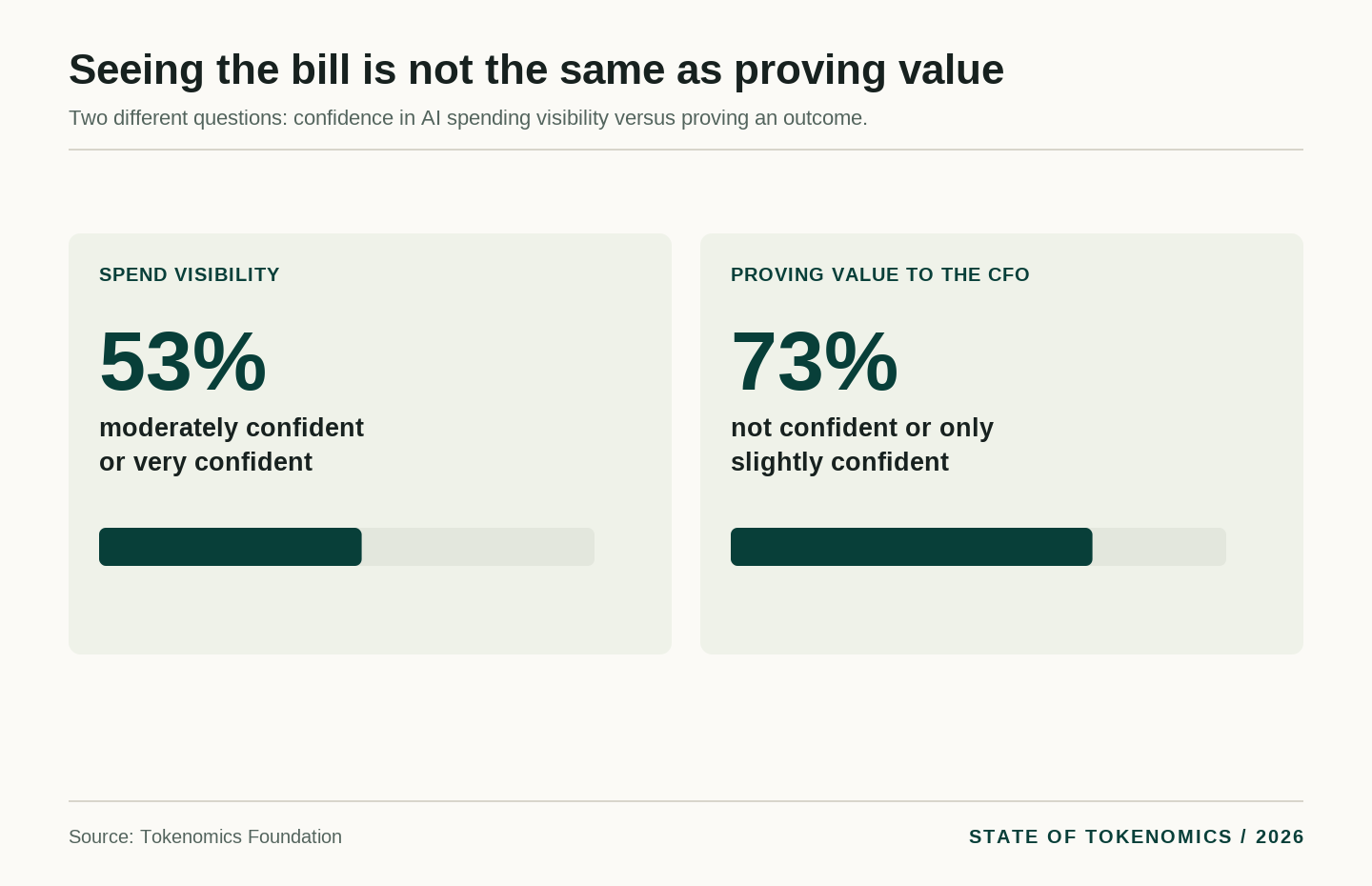
Fifty-three percent of respondents were moderately or very confident in their AI spending visibility. Yet 73% were not confident or only slightly confident that they could prove an AI business outcome to the CFO.
These figures answer different questions. Seeing the bill is not the same as proving value.
A company may know how many tokens it used without knowing whether that use increased revenue, reduced service time or helped employees complete more work.
The biggest challenges
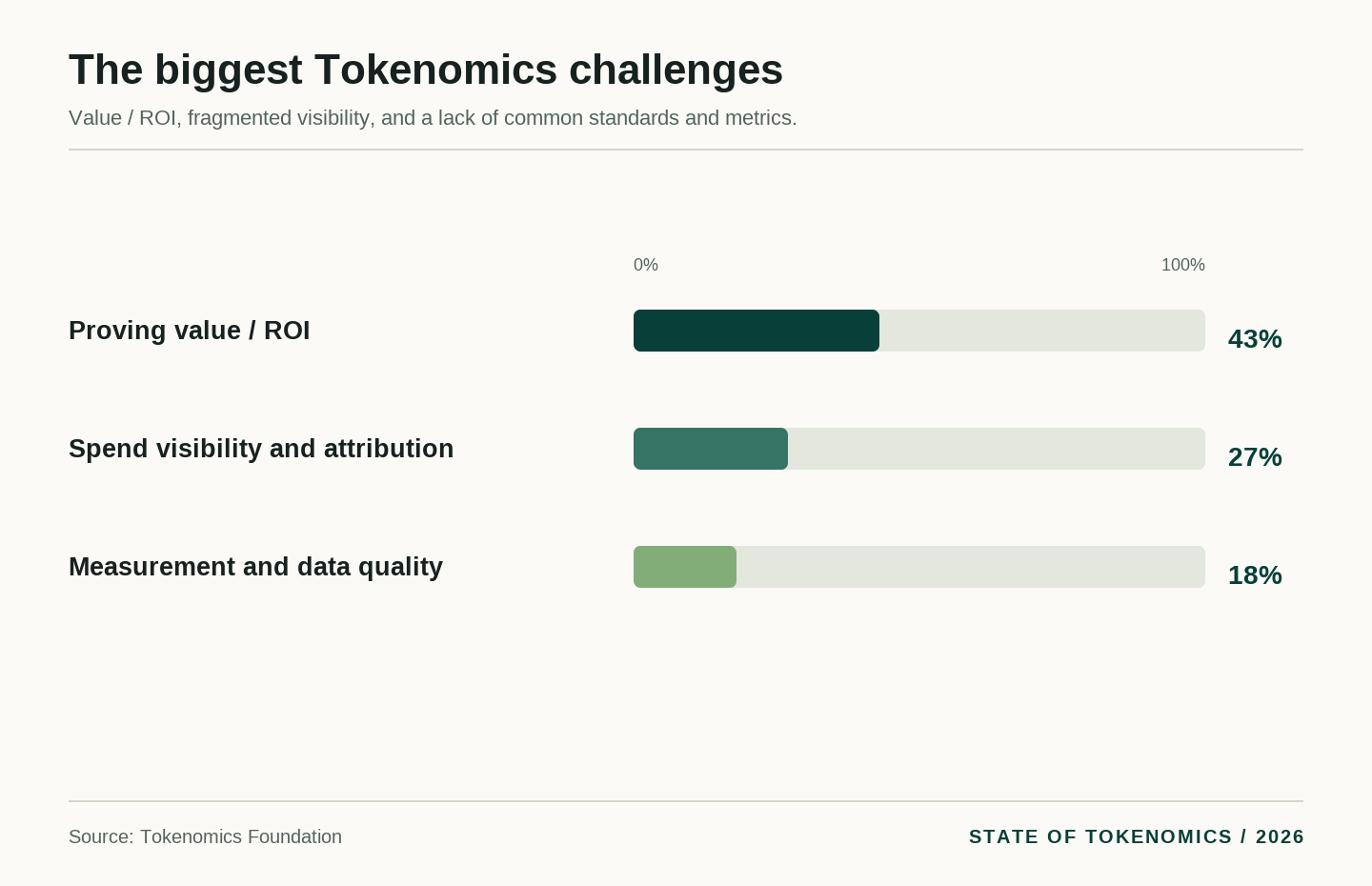
Respondents most often named:
- Proving value or ROI: 43%
- Spending visibility and attribution: 27%
- Measurement and data quality: 18%
Seven percent named cost or pricing complexity as a challenge. Price matters, but the survey suggests that connecting spending to a measurable result is a more common concern.
The report also identifies a lack of industry standardization and common metrics as a broader challenge.
Ownership is in place. The model is not settled.
Eighty-eight percent reported defined ownership of AI economics. Technology leaders were the most common owners, at 35%, followed by shared ownership across functions, at 26%.
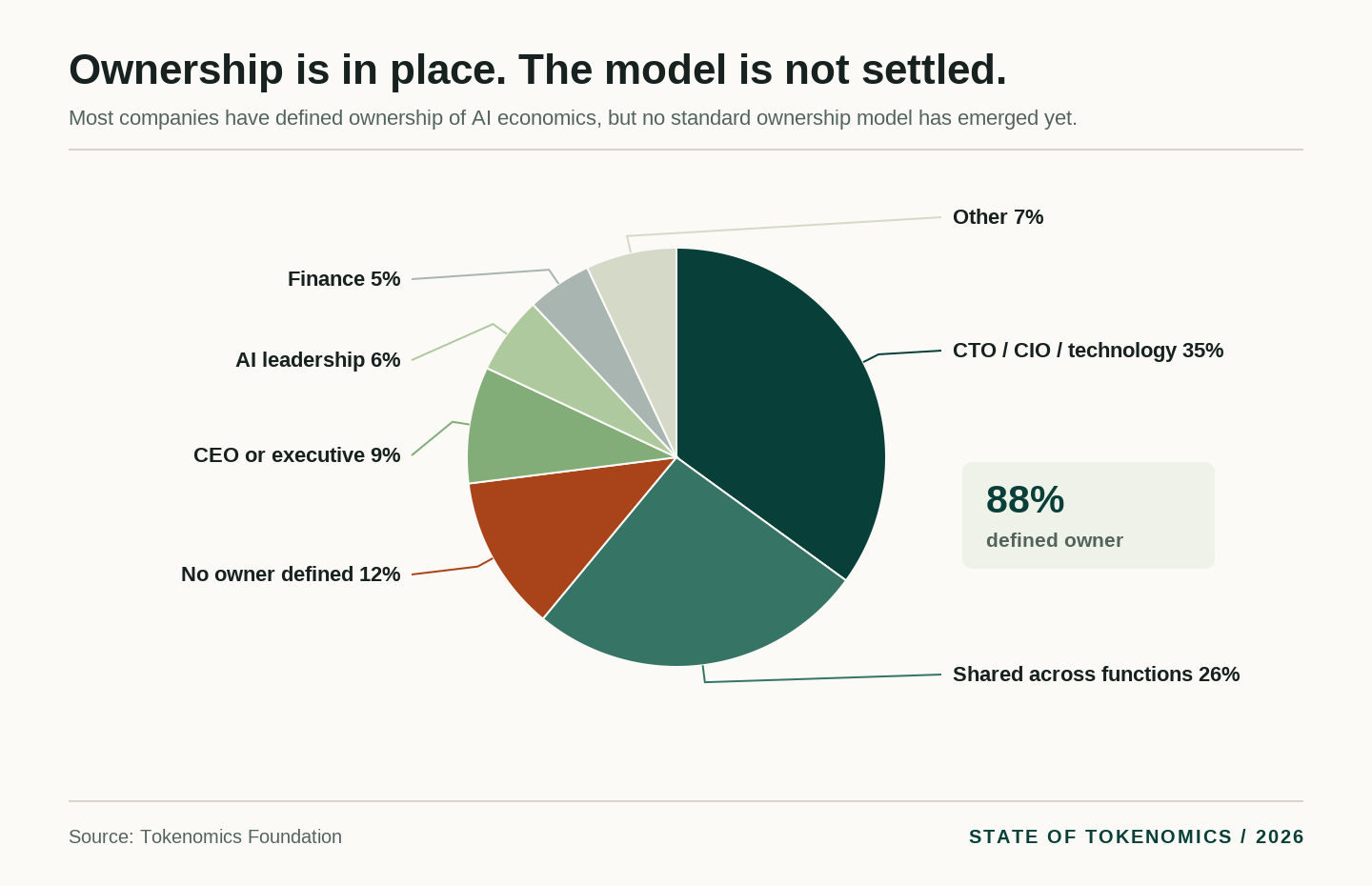
The report also says organizations with an owner were 3.7 times more likely to show value to the CFO. At the same time, it says none of the organizations without an owner could connect AI spending to a CFO outcome. The report does not explain how those statements relate to each other, so the comparison needs clarification.
In any case, an association would not prove that assigning an owner causes better outcomes. Companies with defined ownership may also have more mature data, governance and measurement practices.
What companies want from providers
Respondents requested more granular spending and usage data, common standards, and better attribution and tagging. Four percent requested cheaper prices — a separate measure from the 7% who named pricing complexity as a challenge.
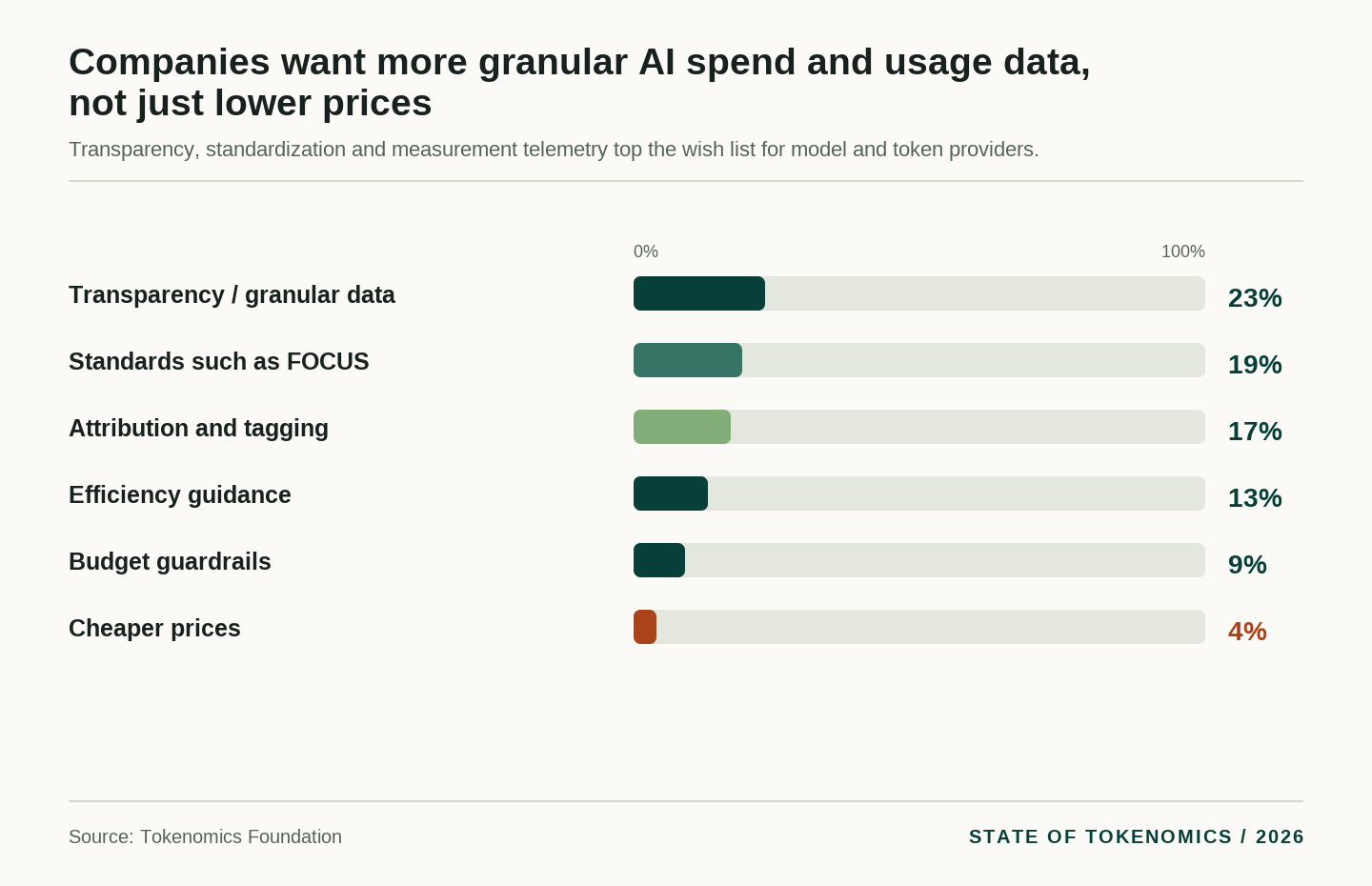
Powerful models alone do not answer the business question. Companies also need to understand where AI spending goes, who uses it and which business results it supports.